A Tilt Trigger System vs General Mental-Game Advice: What Actually Stops Tilt at the Table
Most mental-game advice tells you how to feel after a bad beat. A tilt trigger system tells you what to do in the next three hands. Both matter. This page compares an in-session, rule-based stop system with broad mindset approaches — fairly — and shows why they work best together rather than as rivals.
Related: the free tilt check, the field guide to the Tilt Trigger System, the session tracker (stop rules + tilt log), and the LAG vs TAG comparison for how style interacts with tilt risk.
Quick definitions
General mental-game advice covers the longer arc: acceptance of variance, process over results, breathing and reset routines, journaling, identity ("I am a player who makes good decisions"), and lifestyle habits that keep you sharp. It is usually studied away from the table and applied as a mindset.
A tilt trigger system is an in-session playbook: name the tilt type you are seeing (in yourself or an opponent), apply a pre-written adjustment or stop rule, and leave when the rule says leave. It is closer to a checklist than a philosophy. In Unleash the Madman this is the Tilt Trigger System — spot, pressure (with better bets only), protect.
Tilt system vs mental-game advice at a glance
| Dimension | General mental-game advice | Tilt trigger system (in-session) |
|---|---|---|
| Time horizon | Weeks and months of practice; builds baseline resilience | This orbit and this session; acts in the next few hands |
| Unit of advice | Mindset, identity, habits, post-session review | Named type + rule: what to bet, what to stop, when to leave |
| Where you use it | Mostly off-table; applied as composure on-table | On-table, written before you sit, checked after big pots |
| Handles opponent tilt? | Usually focuses on your game | Yes: different adjustments for Steaming, Chasing, Turtle, Revenge (and noting an Iceman) |
| Handles your tilt? | Yes — deeper causes and long-term fixes | Yes — stop-loss, time stop, tilt-trigger exit, type-specific resets |
| Risk if used alone | You feel calmer but still fire into stations or stay stuck for hours | You follow rules mechanically without repairing the habits that keep putting you on tilt |
| Best complement | A written in-session checklist so composure has a place to land | Mental-game work so the checklist is not fighting a wrecked baseline |
The five tilt types (site names)
This site's tools use five names. A rule-based system needs specific labels; "I'm tilted" is too vague to act on.
| Type | What it looks like | In-session rule (you) | Adjustment (opponent) |
|---|---|---|---|
| Steaming | Instant reloads, faster actions, raises with junk | One orbit of raise-or-fold only; no hero calls | Widen value 3-bets; let them bluff into strength |
| Chasing | "You always have it"… then calls anyway | Turn bluffs off; leave if you call to get even | Stop bluffing; value thinner and bigger |
| Turtle | Suddenly tight and passive; folds to every stab | Keep opening your normal ranges while stuck | Steal, c-bet, barrel; believe their big bets |
| Revenge | Wide and aggressive vs one player only | If you're the target: no needling; leave if it becomes personal | Widen value vs them; cut marginal bluffs |
| Iceman | Same ranges and timing up or down | Watch post-win looseness and late fatigue anyway | No tilt leak to attack; play them straight |
Take the free tilt check to see which type you default to. Log the type that showed up tonight on the session tracker.
What each approach actually stops
Mental-game work stops (or shrinks)
- Chronic result-orientation that turns every downswing into a crisis.
- Lifestyle leaks — sleep, substances, bankroll denial — that make tilt inevitable.
- The story that a bad beat means something about you.
It does not, by itself, tell you whether to barrel the turn into the sticky player in seat six.
A tilt trigger system stops (or shrinks)
- The next bad decision after a bad beat: the steam 3-bet, the chase call, the revenge pot.
- Sessions that should have ended an hour ago.
- Misreading opponent tilt (bluffing a Chasing opponent; giving a Turtle a free card).
It does not, by itself, fix why you keep arriving at the table already on edge.
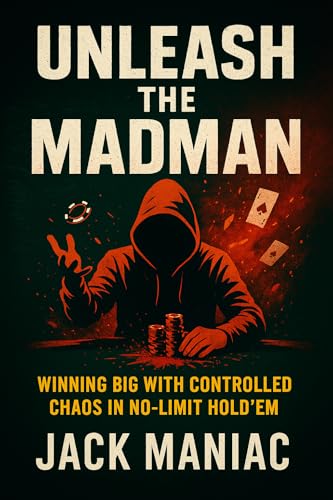
Want the Controlled Chaos playbook?
Unleash the Madman by Jack Maniac is a short No-Limit Hold'em guide to loose-aggressive play with a leash: fold equity, the Tilt Trigger System, and when to stop firing.
Free on Kindle Unlimited · or $9.99 on Kindle
A worked night: same player, two toolkits
Hypothetical example (labelled): $1/$3 live, you buy in for $300. Ninety minutes in you lose a $220 pot when your top set loses to a runner-runner flush. Energy drops. You feel heat in your chest.
Mental-game-only path: You remind yourself "variance is normal" and "trust the process." Useful — and incomplete. Without a rule, you still open wider, call a river to "see it," and stay for a third hour. Process talk without a stop rule often becomes permission to keep playing.
System path (on top of the mindset): Your pre-written rules say: (1) stop-loss = 1.5 buy-ins, (2) after any pot over $150, one orbit of raise-or-fold only, (3) leave if you notice Chasing language ("I have to see a showdown"). You are already near the stop-loss. You take the orbit, then leave. The mindset helped you accept the bad beat; the system ended the session before the second leak.
Neither path invents population data. It is one labelled night to show where each tool acts.
They are complementary — honestly
Pitching a tilt system as a replacement for mental-game work is a false fight. Pitching mindfulness as enough while you ignore stop rules is the other false fight.
- Build the baseline off-table. Sleep, roll, and a process identity. Broad mental-game books and coaching earn their keep here.
- Write the in-session rules before you sit. Stop-loss, time stop, tilt-trigger exit, and the five-type adjustments. Put them on the tracker.
- After big pots, name the type. Steaming, Chasing, Turtle, Revenge — or note that you are still an Iceman and watch fatigue.
- Review in ten minutes, not two hours. Header, tilt log, three hands, bluff audit, one rule. That loop is where mindset and system meet.
Style matters too: LAG vs TAG swings change how much tilt fuel you generate. Controlled Chaos (aggression with a leash) needs the leash written down.
What a good stop rule looks like (write it before you sit)
Mindset says "I'll leave if I'm not playing well." A system makes that observable:
- Stop-loss: a dollar or buy-in number, not a feeling. Example: 1.5 buy-ins.
- Time stop: a clock time or a maximum hours, especially when energy is already low.
- Tilt-trigger exit: one sentence you can recognise mid-hand — "I leave if I call a river to get even" (Chasing), or "I leave if I open junk the orbit after a bad beat" (Steaming).
Write all three on the session tracker in ink or in a notes app before the first hand. Rules invented while stuck are negotiations with tilt, not rules.
What this page is not
It is not a review of any other author's mental-game book, and it does not claim those books fail. Broad mental-game work is useful. The claim here is narrower: at the table, composure without a typed adjustment still lets the next orbit leak chips — and a checklist without baseline resilience becomes brittle. Use both. For how aggression style changes tilt fuel, see LAG vs TAG; for books aimed at aggressive players (including mental-game titles listed neutrally), see the best books list.
FAQ
What is a tilt trigger system in poker?
An in-session checklist: identify which tilt type is showing (in you or an opponent), apply a pre-written betting adjustment or stop rule, and leave when the rule says leave. It is rule-based, not vibes-based.
Is mental-game advice enough to stop tilt?
It helps the long arc, but without stop rules and type-specific adjustments you can still steam, chase or turtle in the next orbit. Use both.
What are the five tilt types on this site?
Steaming, Chasing, Turtle, Revenge and Iceman. The free tilt check maps you to one and gives resets.
Should I exploit opponents who are tilting?
Yes — with better bets, calls and folds only. Needling or berating someone to put them on tilt is bad etiquette and bad for the game.
Free email course
Free 5-day Controlled Chaos email course — one short lesson a day on when to fire and when to stop. No fluff.
Aggression with a leash
Unleash the Madman shows you how to fire when the math says fire and stop when it says stop — fold equity, tilt reads, overbet and semi-bluff filters, from $1/$2 to $25/$50.
Free on Kindle Unlimited · or $9.99 on Kindle
More free tools and articles
LAG vs TAG
Controlled Chaos compared with tight-aggressive at low stakes.
LAG strategy guide
Five rules, the bluff formula, and a worked $1/$2 hand.
Best books for aggressive players
Seven books that make a betting style profitable.
Should I Fire? calculator
Fold equity, pot odds and a fire / don't-fire call.
Tilt check
Which tilt type are you, and what's the reset?
Session tracker
Stop rules, tilt log, bluffs fired and a 10-minute review.
Hand of the Day
One real spot a day with the math worked out.