LAG vs TAG Poker: Controlled Chaos vs Tight-Aggressive at Low Stakes
Loose-aggressive (LAG) and tight-aggressive (TAG) both raise more than they call. The fight is over how many hands they play and how often they keep betting after the flop. This page compares the two styles side by side — ranges, variance, tilt risk, fold-equity math and a single hand played both ways — so you can pick the right default for the table in front of you.
Looking for the how-to rather than the comparison? Start with the free LAG strategy guide. For books that teach aggressive play, see the best poker books for aggressive players.
Quick definitions
TAG (tight-aggressive) plays a narrow set of starting hands and plays them by betting and raising. Typical tracker numbers at low-stakes live or soft online games sit around 18–22% VPIP and 15–18% PFR. The gap between the two is small: a TAG raises almost everything they play.
LAG (loose-aggressive) plays more hands and still raises them. A workable low-stakes profile is roughly 26–32% VPIP with 22–28% PFR. The same small gap applies. A player at 40/10 is not a LAG — that is a loose-passive caller who pays off everyone else's value bets.
Controlled Chaos, as used in Unleash the Madman, is LAG with a leash: more hands in position, bluffs that clear a break-even fold number and a player who actually folds, and stop rules that end the session before fatigue turns aggression into spew.
LAG vs TAG at a glance
| Dimension | TAG (tight-aggressive) | LAG / Controlled Chaos |
|---|---|---|
| VPIP / PFR (typical low-stakes) | 18–22% / 15–18% | 26–32% / 22–28% |
| Where the extra hands come from | Mostly late position; early ranges stay tight | Mostly cutoff and button; early ranges stay close to TAG |
| Bluff frequency | Lower; mostly semi-bluffs with clear equity | Higher; more pure barrels and multi-street pressure when fold equity is there |
| Variance | Lower swing size; fewer all-ins without the nuts | Higher; more pots contested, bigger downswings and upswings |
| Tilt risk | Smaller dollar swings; the quiet leak is turtling after a loss | Larger swings → more fuel for steaming, chasing and revenge tilt |
| Best opponents | Loose-passives and stations who call too much | Nits, fit-or-fold recreational players, and anyone who overfolds to barrels |
| Worst opponents | Other solid regs who 3-bet light and deny you cheap pots | Calling stations and sticky chasers who never fold |
| Main edge source | Hand selection + thin value when ahead | Fold equity + value when your image makes monsters look like air |
| Bankroll / energy needed | Smaller roll, shorter sessions still work | Bigger roll, fresher mind; stop rules matter more |
Numbers are typical ranges for soft low-stakes No-Limit Hold'em, not solver targets. Your exact VPIP should move with table size, rake and how often the players behind you 3-bet.
The math both styles share
Whether you play TAG or LAG, every pure bluff has the same break-even: the opponent has to fold often enough that you recover the bet. The formula is:
Folds needed = bet ÷ (bet + pot)
Worked examples (rounded to the nearest percent):
| Bet size | Example | Folds needed | Exact fraction |
|---|---|---|---|
| ⅓ pot | $10 into $30 | 25% | 10 ÷ 40 = 0.25 |
| ½ pot | $20 into $40 | 33% | 20 ÷ 60 ≈ 0.333 |
| ⅔ pot | $40 into $60 | 40% | 40 ÷ 100 = 0.40 |
| ¾ pot | $30 into $40 | 43% | 30 ÷ 70 ≈ 0.429 |
| Pot | $50 into $50 | 50% | 50 ÷ 100 = 0.50 |
| 1.5× pot | $75 into $50 | 60% | 75 ÷ 125 = 0.60 |
| 2× pot (overbet) | $100 into $50 | 67% | 100 ÷ 150 ≈ 0.667 |
Semi-bluffs need fewer folds than this, because you still win some of the time when called. Plug outs and fold % into the free Should I Fire? calculator, or skim the fold-equity chart for the same numbers on one page.
The style difference is not the formula. It is how often each style asks that question. A TAG asks it on fewer streets with stronger ranges. A LAG asks it more often, and has to be stricter about walking away when the answer is "no" — especially against stations. That "stop firing" filter is covered in the LAG strategy guide.
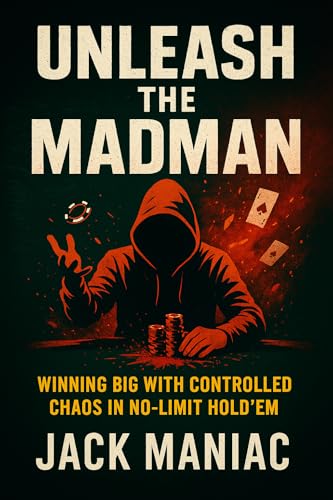
Want the Controlled Chaos playbook?
Unleash the Madman by Jack Maniac is a short No-Limit Hold'em guide to loose-aggressive play with a leash: fold equity, the Tilt Trigger System, and when to stop firing.
Free on Kindle Unlimited · or $9.99 on Kindle
One hand, played both ways
$1/$2 live, $300 effective. You are on the button with Q♥ J♥. The hijack limps. You raise to $10. The big blind calls; the limper folds. Pot is $23.
Flop: T♠ 6♦ 2♣ (rainbow). The big blind checks. You have two overcards, a gutshot to the king (straight: K-Q-J-T-x), and a backdoor flush draw. Against a typical big-blind continue range on this dry board, you are often behind a ten, a pair of sixes/deuces, or a better ace-high — but a lot of that range folds to one bet.
TAG line
Many tight-aggressive players check back here. Reasons that are coherent:
- No made hand; ace-high boards and ten-high boards both put you in awkward spots later.
- You keep the pot small with a hand that has showdown value against worse broadway cards.
- You avoid a check-raise that forces you to continue or abandon equity with a weak draw.
Checking back is not "scared." It is choosing variance you do not need when the table is soft and you can wait for better spots. Turn comes A♣. Big blind checks again. Now a TAG often bets about half pot ($11 into $23) as a delayed c-bet: the ace is a scare card that hits the preflop raiser's range hard. Break-even as a pure bluff: 11 ÷ (23 + 11) = 11 ÷ 34 ≈ 32% folds. Against a fit-or-fold big blind, that number is easy. Against a sticky caller, check it down and take your free river card.
LAG / Controlled Chaos line
Bet the flop: $15 into $23 (about two-thirds pot). Pure-bluff break-even: 15 ÷ (23 + 15) = 15 ÷ 38 ≈ 39% folds. You are not a pure bluff — when called you still have six outs to pair the queen or jack (about 13% on the turn alone) plus the gutshot and backdoor flush — so the real fold % you need is lower than 39%. On a dry ten-high board, against a big blind who check-folds a lot of missed high-card hands, this is a standard Controlled Chaos bet.
Big blind calls. Pot is now $53. Turn: A♣. Big blind checks.
Second barrel: $35 (about two-thirds pot). Pure-bluff break-even: 35 ÷ (53 + 35) = 35 ÷ 88 ≈ 40% folds. The ace is an excellent barrel card for the preflop raiser: it hits your range (A-x that would have raised preflop), misses most of his flop-calling range of tens, sixes and weak gutshots, and does not actually help Q♥J♥ — only the story. That is fine. Fold equity is the point of the bet.
If the big blind is a known station who called the flop with any pair and any draw, stop. Two stop-firing signals are already flashing (sticky caller + no equity upgrade on the turn). Check back, take the free river, and save the bluff for someone who folds. That is the leash in Controlled Chaos.
Same cards. Two coherent lines. The TAG line protects variance and waits for a clean scare card. The LAG line taxes the big blind's continuing range immediately and again when the ace lands — but only while the player still folds. Run the same numbers yourself with the calculator, then grade the decision (not the result) on the free session tracker.
When TAG is honestly better
Loose-aggressive is not always the higher-EV default at low stakes. Play tighter — or park the pure bluffs — when most of these are true:
- The table is full of calling stations. Fold equity is the LAG's second way to win. If nobody folds, the second way disappears and your bluffs become donations. Value-bet thinner, size up with strong hands, and stop firing. A TAG default prints here.
- You are short-rolled or already stuck for the night. LAG variance needs a buffer. If two buy-ins of swing would ruin your week, tighten until the roll catches up.
- Energy is low. Aggression without attention becomes spew. A tired LAG fires into stations, chases, and breaks stop rules. A tired TAG still takes the obvious value bets and goes home. Use the tilt check and leave when your type starts showing.
- You are still learning postflop. A narrower range means fewer hard decisions. Build the TAG foundation first; add Controlled Chaos hands from the cutoff and button once the break-even math is automatic.
- The players behind you 3-bet light and isolate well. Opening 30% into a table of aggressive regs is a tax. Open TAG-wide until you have position and a read.
None of that means "TAG is better forever." It means the style has to fit the table, the roll and the brain you brought tonight.
How to blend the two
Most winning low-stakes regulars are not pure TAG or pure LAG. They move between the two:
- Default TAG out of position; LAG in position. Under the gun and early middle position stay close to an 18–20% open. Cutoff and button climb toward 30%+ when the blinds fold enough.
- Watch the fold button for one orbit before you widen. If the big blind defends 40% and never check-folds a dry flop, your extra LAG hands should be value-heavy, not bluff-heavy.
- Shift gears after you show down a monster. Image is a real resource at live low stakes. When the table just saw your nuts, the next hour of Controlled Chaos barrels gets paid with worse — and folds more often when you miss.
- Keep one style's stop rules even when you play the other. Stop-loss, time stop, tilt trigger. Write them on the session tracker before you buy in.
- Review three hands, not thirty. After the session, pick one TAG fold you are proud of, one LAG barrel that cleared the number, and one spot where you ignored a stop-firing signal. The Hand of the Day archive is useful practice when you want a fresh spot with the math already worked out.
FAQ
What is the difference between LAG and TAG in poker?
Both styles raise more than they call. A TAG plays fewer starting hands (roughly 18–22% VPIP at low stakes) and a LAG plays more (roughly 26–32%), while keeping PFR close to VPIP. The practical difference after the flop is how often each style bets again when they miss.
Is LAG or TAG better at low stakes?
It depends on the table. Against players who fold too much, LAG / Controlled Chaos usually wins more. Against a table of calling stations, a TAG default with thinner value bets is stronger. The break-even fold % on your bet size tells you which world you are in.
What VPIP and PFR should a LAG have?
A workable low-stakes LAG profile is about 26–32% VPIP with PFR only a few points lower (22–28%). If VPIP is high and PFR is low, you are calling too much, not playing loose-aggressive.
Does loose-aggressive poker have more variance?
Yes. More pots contested and more bluffs mean bigger swings in both directions. That is manageable with a bigger bankroll, shorter sessions when energy drops, and written stop rules — not by pretending the swings are not there.
Can I switch between LAG and TAG in the same session?
Yes, and you should. Widen in position against folders; tighten and value-bet against stations. Style is a response to the table, not an identity.
Free email course
Free 5-day Controlled Chaos email course — one short lesson a day on when to fire and when to stop. No fluff.
Aggression with a leash
The comparison tells you which gear to use. Unleash the Madman shows you how to fire when the math says fire and stop when it says stop — fold equity, tilt reads, overbet and semi-bluff filters, from $1/$2 to $25/$50.
Free on Kindle Unlimited · or $9.99 on Kindle
More free tools and articles
LAG strategy guide
Five rules, the bluff formula, where LAGs make money, and a worked $1/$2 hand.
Best books for aggressive players
Seven books that make a betting style profitable instead of expensive.
Should I Fire? calculator
Fold equity, pot odds and a fire / don't-fire call for any spot.
Fold-equity chart
Break-even folds by bet size on one printable page.
Session tracker
Stop rules, tilt log, bluffs fired and a 10-minute review.
Tilt check
Which tilt type are you, and what's the reset?
Hand of the Day
One real spot a day with the math worked out.
Tilt system vs mental game
In-session stop rules compared with broad mindset advice.
Exploitative vs GTO
When to exploit at low stakes, with fold-equity and MDF math.